About RCC Water Channel
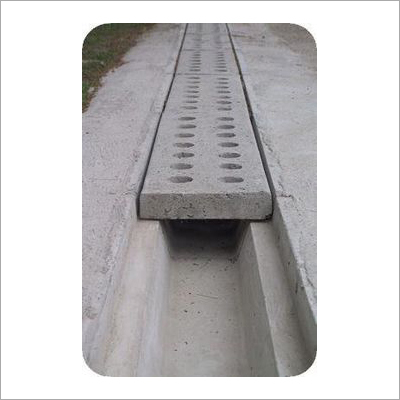
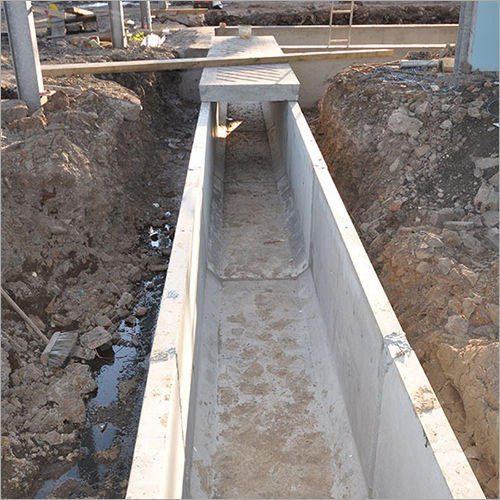
This RCC Water Channel may be partially constructed for use with storm drainage systems. Both real estate developments and citywide stormwater drainage initiatives can take advantage of this. In situations when building development plans call for it, this channel can be removed and relocated. This RCC Water Channel provides a significant degree of adaptability to a broad range of site and natural situations. This channel can last for many years if it is well-maintained.
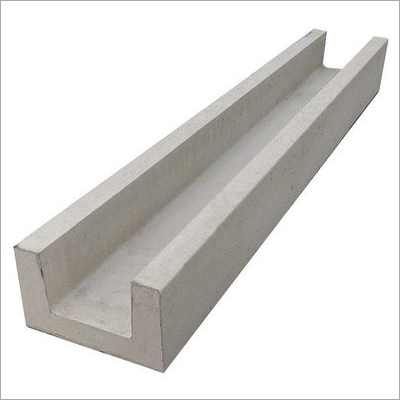
Precision Design & Flexible ConfigurationsThese RCC Water Channels are manufactured to meet various project requirements, offering a standard size of 300mm x 300mm x 1000mm and accommodating custom dimensions as needed. The U-shaped form, variable thickness (40-75 mm), and optimal internal width allow precise channeling for irrigation, drainage, and stormwater projects. Their grey, smooth finish ensures quick flow and minimal debris retention.
Dependable Strength & LongevityConstructed from advanced M30 and M35 grade concrete and reinforced with high-tensile steel bars, these channels achieve compressive strengths beyond 30 MPa and bear loads above 20 T. Their corrosion-resistant, fireproof nature, combined with a life expectancy of over half a century, makes them ideal for demanding environmental conditions and applications.
Efficient Installation & Eco-Conscious ProductionRCC Water Channels can be quickly installed manually or with light machinery thanks to their grooved joint design, which ensures snug, leak-free alignment. Each unit is precast and arrives ready for immediate use. As a sustainable solution, the channels are recyclable and produced with high-grade aggregates and cement-emphasising eco-friendliness alongside performance.
FAQ's of RCC Water Channel:
Q: How are RCC Water Channels installed on-site?
A: RCC Water Channels are typically installed by direct laying on a prepared base. Their male-female grooved ends enable easy interlocking, facilitating quick and accurate alignment. Installation can be carried out manually or with the assistance of light machinery due to the reasonable weight of each unit (approx. 55-75 kg).
Q: What benefits do high-tensile steel reinforcements provide in these channels?
A: High-tensile steel bars significantly enhance the compressive and structural strength of RCC Water Channels, enabling them to withstand heavy loads above 20 T and resist shocks, ensuring long-term durability in high-traffic or high-flow environments.
Q: When should I opt for custom sizes rather than the standard RCC channel dimensions?
A: Custom sizes are recommended when your project's drainage or irrigation requirements differ from the standard 300mm x 300mm x 1000mm dimensions. Projects demanding varied flow capacities, installation constraints, or specific site geometries will benefit from tailored width, height, or length configurations.
Q: Where are RCC Water Channels commonly used?
A: RCC Water Channels are widely employed in roadside drainage, surface water channeling, storm water management, and irrigation for agricultural fields. Their sturdy construction and long lifespan make them suitable for urban, rural, and industrial projects across India.
Q: What process is used to manufacture these channels, and how does that affect quality?
A: Each channel is precast using casting machines and molds, combining high-purity cement, selected aggregates, and high-tensile steel reinforcement. Controlled manufacturing ensures consistent dimensions, smooth finish, and superior compressive strength, resulting in reliable and long-lasting products.
Q: How eco-friendly are these water channels?
A: RCC Water Channels are fabricated from recyclable materials and are themselves fully recyclable at end-of-life. Their production uses high-grade, eco-conscious aggregates and cement blends, supporting sustainable infrastructure development.
Q: What kind of maintenance do these channels require during their lifespan?
A: Thanks to their smooth, corrosion- and shock-resistant finish, these channels require minimal maintenance. Periodic clearing of debris may be necessary to maintain optimal water flow, but the channels are generally designed for low upkeep throughout their 50+ year service life.










 Send Inquiry


 Send Inquiry
